
Production
From Pre-Production to Final Cut: The Complete Film Production Process
A practical step-by-step guide to how a film moves from an early idea through pre-production, production, post-production and final delivery.
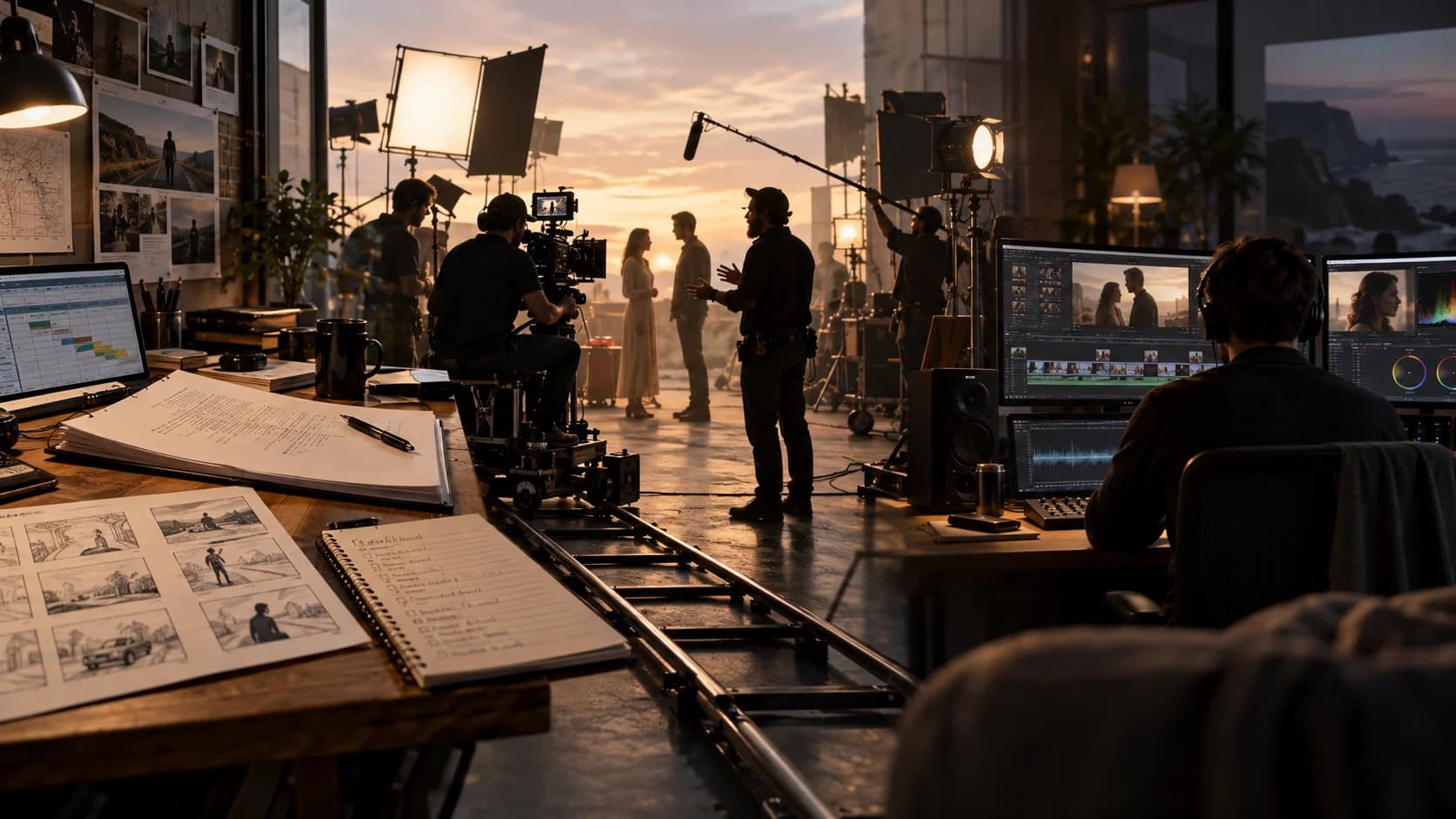
A finished film may run for only a few minutes or a few hours, but the work behind it passes through several connected stages. The strongest productions do not treat writing, planning, shooting and post-production as separate islands. Each stage prepares the next one, and that is what keeps creative ambition from turning into production confusion.
1. Development: define what the film is really trying to do
Development begins before the call sheet, camera package or casting conversation. This is where the core idea is tested: what is the story, who is it for and why should the audience care?
At this stage the script or treatment is refined, references are collected, scale is estimated and the production begins identifying what is essential versus optional.
- Clarify the story, audience and purpose
- Develop the script, treatment or creative brief
- Estimate cast, locations, scale and technical needs
- Set early budget and timeline expectations
2. Pre-production: turn the idea into a workable plan
Pre-production is where creative ambition meets logistics. The team breaks the script into scenes, cast, locations, props, wardrobe, equipment, sound, lighting, transport and scheduling requirements.
The more decisions that are solved before the shoot, the more freedom the crew has on set. Good planning should remove avoidable uncertainty without making the creative process rigid.
- Casting and rehearsals
- Location scouting and permissions
- Budget, schedule and call sheets
- Shot list, storyboard and technical recce
- Art, costume, makeup and props
- Camera, lighting and sound planning
3. Production: protect the plan while staying adaptable
The shoot is where time becomes expensive. Direction, camera, lighting, sound, art, makeup, production and performance have to move together.
Unexpected weather, performance changes, location restrictions or technical problems can alter a day. A prepared team can adapt without losing the story.
- Prioritise essential shots before optional coverage
- Monitor sound, continuity and exposure
- Keep departments informed when the plan changes
- Back up footage and production audio before wrap
4. Post-production: the film is written again in the edit
Editing decides rhythm, emphasis and emotional timing. Once picture begins to settle, sound design, music, visual effects, titles, colour grading and mastering shape the final experience.
Post-production works best when it is planned from the beginning. Correct file organisation, slates, sound reports and backups can save hours later.
5. Delivery: finish for the screen where the audience will actually watch
A film is not finished simply because the edit timeline is locked. Cinema, festival, OTT, broadcast, YouTube and social platforms can require different aspect ratios, loudness, subtitles, codecs and masters.
Confirm delivery requirements early, keep a clean master and archive the project properly. That protects the work after launch and makes future versions easier.
FAQ
Common questions
What are the main stages of film production?
Development, pre-production, production, post-production and final delivery/distribution.
Which stage prevents the most avoidable problems?
Strong pre-production usually prevents the most avoidable cost and schedule problems because key decisions are solved before shoot days begin.
Final Take
The complete film production process is not a straight line, but a clear stage-by-stage workflow gives creativity a reliable structure. Solve the right problems early so the team can focus on storytelling when the camera rolls.